Letters That Continued an Earlier Conversation
Letters that continued an earlier conversation let a reply arrive with care, giving both people room to revisit a meaningful exchange and respond thoughtfully.
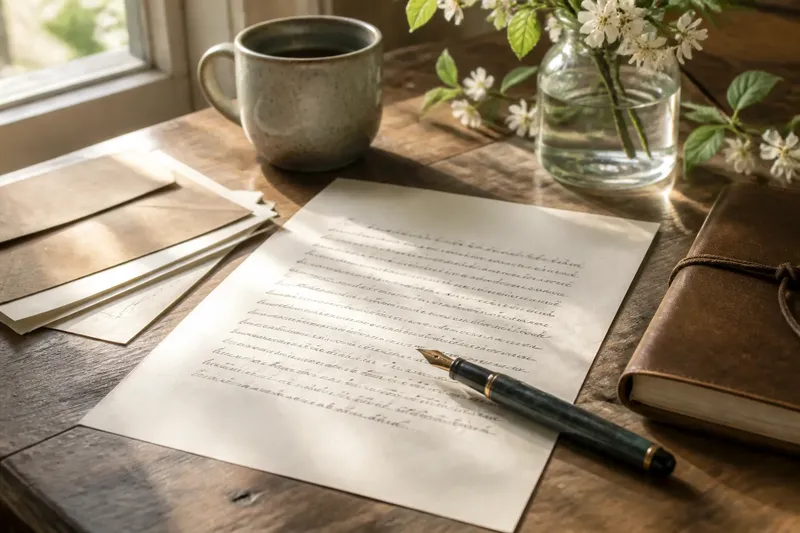
How can a letter continue a conversation without pretending that nothing has changed? Letters that continued an earlier conversation made room for a considered reply: one person could return to what was said, decide what mattered, and answer from a later moment. The delay was not merely an inconvenience. It shaped the response.
That difference matters whenever an exchange lingers after people part. A quick message can settle a detail or keep plans moving. A letter can pick up an unfinished thought, acknowledge what the other person risked saying, and add something that would have been hard to say on the spot. Its purpose is not to reproduce a conversation on paper. It is to continue one across a gap.
What makes a letter a continuation?
A continuing letter responds to a particular exchange, rather than sending a free-standing update. It might refer to a question left open, an admission that changed the tone, or a small detail that showed what the speaker cared about. The recipient can recognize the thread without needing every word repeated.
That recognition is the letter’s hinge. “I keep thinking about what you said” is a start, but it can sound vague unless the writer names what stayed with them. A more useful reply might identify the choice the other person was weighing, then explain what the writer has understood since. Specificity tells the recipient: I heard that part, not just the general subject.
A letter can also continue a conversation by changing its shape. In person, a listener may have nodded, joked, or moved on because the moment was crowded. On the page, the writer can return to that beat and give it more attention. The letter neither rewinds the exchange nor claims to settle it. It adds another turn.
Why reply after a pause?
A pause can give a writer time to separate an immediate reaction from a considered answer. That matters when the earlier exchange carried disappointment, uncertainty, affection, or a decision neither person wanted to rush. Waiting may reveal which point deserves a response and which was only the heat of the moment.
Time can also change the reply’s content. A person might learn what they think by trying to phrase it, notice that they misunderstood a question, or realize that the other person’s concern was not the one they first heard. A letter can hold this revision openly: “I answered too quickly when we spoke; what I meant was…” Such a sentence takes responsibility without pretending the earlier moment can be erased.
Still, delay is not automatically thoughtful. A recipient may read silence as avoidance, especially if a practical decision is waiting. If a reply will take time, a brief note can say that the writer wants to answer carefully and will return to the subject. That small signal keeps the pause from carrying a message the writer did not intend.
What belongs in a considered reply?
Begin with the point from the earlier exchange that the letter is actually answering. It could be a question, a concern, or something the other person said that deserves acknowledgment. Then offer the writer’s present response, including what remains uncertain. This order helps the recipient see the connection before encountering the writer’s own reflection.
A considered reply often includes four distinct moves:
- Recall: Name the specific moment or issue, rather than summarizing the whole conversation.
- Acknowledge: Show what the writer heard, especially if the other person disclosed something vulnerable.
- Respond: State a view, answer the question, or explain why the writer is not ready to decide.
- Leave room: Invite correction or another reply without demanding agreement.
These moves need not become a rigid formula. A warm letter may linger over a shared detail before answering directly; a difficult one may begin with the answer. The point is to make the reply legible. Think of the earlier conversation as a book left open on a particular page: a continuation should help the recipient find that page, not make them guess which volume the writer means.
Say two friends part after one admits that a recent change at work has made them unsure about staying. Imagine the writer waits until they can distinguish concern from advice, then sends a letter that recalls the admission, says they heard how much the decision affects the friend’s sense of purpose, and asks whether the friend wants practical suggestions or simply company while deciding. The observable result is a reply that can address the friend’s actual need, rather than forcing them to correct an assumption. The scene is invented, but it shows how a careful letter can extend a conversation without taking ownership of it.
How specific should the memory be?
Specific enough that the recipient knows which exchange the writer means, but not so detailed that the letter reads like a transcript. A phrase, question, or turning point may be enough. Reproducing every line can make the recipient feel cross-examined, particularly if the writer is using remembered words to prove a point.
Memory also deserves humility. People can hear the same exchange differently, and a later letter cannot make one person’s recollection the official record. Phrases such as “I remember you saying…” or “I may have misunderstood, but…” leave space for the other person’s account. That is not evasiveness. It is a way to continue talking without claiming perfect recall.
If the writer needs to correct a misunderstanding, name the difference plainly and describe their own part in it. “I took your question as criticism and answered defensively” is more useful than assigning the recipient a hidden motive. A letter can explore what the exchange meant to its writer while recognizing that meaning is not shared automatically.
How should a letter invite a reply?
Make the invitation clear, but let the recipient choose its form. A writer can ask a direct question, say that a response would help, or explain that no immediate answer is needed. The right choice depends on whether the subject calls for a decision, a conversation, or simply acknowledgment.
Open invitations can sound generous yet leave the recipient with all the work. “Write whenever” offers freedom, but may not tell them what kind of reply would be useful. A more grounded invitation might ask, “Would you tell me if I understood you correctly?” or “When you have time, I’d like to hear what you want from me now.” Each gives the recipient something concrete to answer or decline.
For sensitive subjects, do not use a letter to corner someone into a response they have not agreed to give. A thoughtful reply can say what the writer needed to say and still leave the next turn in the recipient’s hands. If there is a pressing practical matter, handle that clearly rather than hiding a deadline inside reflective prose.
How does letter writing compare?
A letter suits an exchange that benefits from a durable, rereadable reply. It can carry the writer’s reasoning in a sequence, let the recipient return to a sentence later, and preserve the wording the writer chose. Email can do much the same, especially when speed or accessibility matters. The important difference is not paper versus screen; it is whether the message allows a deliberate answer.
A phone call or face-to-face conversation makes it easier to correct a misunderstanding as it appears. That immediacy can be valuable when emotion is high or the subject is complicated. A letter gives both people more control over timing, but it also removes tone of voice and instant clarification. A careful writer should therefore avoid relying on irony, hints, or a sentence that could sound colder than intended.
Text messages work well for brief follow-ups, practical details, and a simple sign that the conversation has not been forgotten. They can feel thin when the reply needs room to qualify, reconsider, or explain. Choosing a letter is useful when the writer wants to make that room—not because one medium is inherently more sincere than another.
When is a letter not enough?
A letter may be the wrong tool when someone needs an answer immediately, when a misunderstanding is multiplying, or when the writer is hoping the page will do the work of an apology or a difficult conversation. Writing can prepare for those exchanges, but it cannot make another person available or remove the need to listen.
Nor does a carefully phrased reply require the recipient to accept it. The writer can clarify, acknowledge harm, and invite a response; the other person remains free to disagree, need more time, or decline further contact. If the letter touches on serious distress, risk, or a relationship that feels unsafe, seek appropriate support from a qualified professional or trusted local resource rather than relying on correspondence alone.
What do readers ask about letters?
How long should a reply letter be?
Make it long enough to answer the point that stayed with you and short enough that the recipient can follow its thread. A focused page can be more responsive than several pages of reflection that never address the earlier exchange.
Should a letter answer every point?
No; answer the points that matter to the relationship or decision, and say if you are leaving another question for later. Skipping a difficult point without explanation can look like avoidance, while responding to every detail can turn a personal letter into a debate brief.
Is a handwritten letter better than an email?
Neither is automatically better. Handwriting may feel personal and deliberate, while email is easier to send, read, and answer; choose the form the recipient can use comfortably and the subject can bear.
What if the writer remembers the exchange differently?
Describe your memory as your memory, then ask whether the other person recalls it another way. A continuing letter works best as an invitation to clarify, not a verdict about what was said.
What lets the exchange continue?
The strongest continuing letters do not try to make a delayed reply sound like a perfect response. They show how the writer has returned to the earlier exchange, what they understand now, and what they are still willing to hear. That combination lets a letter carry a conversation forward without claiming to finish it.
When you write one, keep the reader’s next choice in view. They may answer in a letter, call, correct your recollection, or simply take time. A considered reply does its work by making that next turn clearer and more humane—not by deciding in advance what it must be.